Skip to content
Sri: Lakshmi Narasimha

శ్రీ నృసింహుడు·The Man-Lion

श्री नृसिंहः

Sri: Narasimha

Neither man nor beast. Neither inside nor outside. Neither day nor night. The fourth avatara of Sri:man Na:ra:yana — emerging from the stone column at the precise seam of every boundary, to keep his word to the boy-saint Prahlada.

Beejaॐ क्ष्रौंom kshraum
Bhagavata · Skandha 7

The Story

From the boon of Hiranyakashipu to the lap of Lakshmi — six beats that carry the entire arc of the avatara.

01

Bhagavata 7.2–7.3

Hiranyakashipu's Tapas

Maddened by the killing of his brother Hiranyaksha by Varaha, Hiranyakashipu performs a tapas of such ferocity that anthills cover his body and the worlds tremble. Brahma at last appears and grants the carefully-worded boon: not to be slain by man or beast, by deva or asura, by any weapon, neither inside nor outside, neither by day nor by night, neither on earth nor in the sky.

02

Bhagavata 7.4–7.5

Prahlada's Bhakthi

A son is born to Hiranyakashipu — Prahlada, who from the womb has heard the teachings of Narada and is utterly given to Na:ra:yana. The asura, learning that his own child reveres the very Lord he hates, attempts to crush this devotion through reason, threat, sword, fire, poison, snakes, war-elephants, and the cliffs of Mount Mandara. The boy emerges from each ordeal unharmed and unmoved, the name of Hari on his lips.

03

Bhagavata 7.8.13–14

The Stambha (Column)

In a final rage Hiranyakashipu strikes a stone column in his audience-hall and demands: 'Is your Hari in this pillar?' Prahlada answers with a serenity that has been called the supreme moment of devotional literature: 'Yes, my Lord is in this pillar — and in every blade of grass.' The column splits open with a sound like the dissolution of the universe. The Lord steps forth.

04

Bhagavata 7.8.19–22

The Manifestation at the Seam

Neither man nor beast — a body half-human, half-lion. Neither indoors nor outdoors — on the threshold of the doorway. Neither day nor night — at sandhya, the precise junction of dusk. Not on earth or in sky — upon his own thigh. Not by any weapon — by the claws which were no weapon. Not by deva or asura — by the Man-Lion, neither. Every clause of the boon is honored; every clause is undone.

05

Bhagavata 7.8.28–31

The Slaying

Hiranyakashipu rushes him with a mace; the Lord catches him as Garuda catches a serpent. He places the asura upon his lap on the threshold-stone, and with the claws of his hands tears him open. The hall floods with light. The asura, gazing into the face of the Lord at the moment of his death, attains a liberation his ordinary life could never have earned.

06

Bhagavata 7.9

Prahlada's Stuti & Lakshmi's Pacification

The Lord's wrath is so vast that even Brahma and Shiva cannot approach. The devas urge Prahlada forward. The boy walks alone to within a hand's breadth of the still-bloodied claws and offers a stuti of unmatched humility: 'I, born of a fierce demon-lineage — what could I offer that would please you, whom even Brahma cannot satisfy?' The Lord is melted; he gathers Prahlada to his chest and licks his head. Then Sri: Mahalakshmi seats herself upon his left lap, and the Ugra-svarupa subsides into the eternal Lakshmi-Narasimha.

ॐ नमो भगवते नारसिंहाय नमस्तेजस्तेजसे आविराविर्भव

om namo bhagavate na:rasimha:ya namas tejas-tejase a:vir-a:vir-bhava

“Salutations to the splendor within splendor — manifest, O manifest!” — the very dhyana whispered by Prahlada when the column began to tremble.

Sri: Vaishnava Reading · Bhagavad Ramanujacharya

The Acharya teaches that the Narasimha avatara is the supreme demonstration of satya-sankalpa — the Lord's vow to protect his bhakta is more inviolate than the laws of nature themselves. Prahlada, in turn, becomes the first and clearest exemplar of prapatti — the surrender that does not bargain with the Lord's ways but waits, unmoved, for the Lord to act.

Mantra Upadesha

HH Chinna Jeeyar Swamiji
Narasimha Initiation

A discourse and mantra-upadesha on the worship of Sri: Lakshmi Narasimha — the threshold of fearlessness, the giver of refuge.

Excerpted from the live discourse · 37:53 — 57:18 · 19 min

Nava Narasimha

The Nine Forms at Ahobilam

One avatara, nine sannidhis — each enshrining a distinct moment from the wrath, the slaying, the pacification, and the teaching.

01ज्वाल नृसिंह

Jwala Narasimha

The Flame-Wreathed

The form of blazing wrath at the very moment Hiranyakashipu is torn upon the Lord's lap; tongues of fire emanate from every mouth. Worshipped at Jwala Ahobilam — believed to be the exact site of the slaying.

02अहोबिल नृसिंह

Ahobila (Ugra) Narasimha

He Whose Strength Astonishes Even the Devas

The original moolavar of Ahobilam. The very name 'Ahobila' is the gasp of Brahma and the gods — 'Aho! Bilam!' (How vast! How deep!) — uttered at the sight of his ferocity. Foundational shrine of the Nava Narasimha Kshetra.

03मालोल नृसिंह

Malola Narasimha

Beloved of Lakshmi

Ma: = Lakshmi; lola = the one who fondly carries her. The peaceful aspect with Sri: Mahalakshmi seated upon his left lap. The utsava murti of Ahobila Mutt; carried in procession across India by the Jeeyar.

04क्रोध नृसिंह

Krodha Narasimha

The Boar-Embracing Wrath

Depicted in Varaha-Narasimha posture, recovering Bhumi-devi from the depths. Tradition holds this form arose during the descent to retrieve the Earth in concert with the Varaha avatara.

05कारञ्ज नृसिंह

Karanja Narasimha

Who Dwells Beneath the Karanja Tree

Seated in dhyana-mudra under a Karanja tree (Pongamia), with a serpent-canopy rising behind him. Iconography reflects the calm following the storm.

06भार्गव नृसिंह

Bhargava Narasimha

Worshipped by Bhargava (Parashurama)

Located near a holy tirtha called Akshaya Tirtha. Tradition recalls that Sage Bhargava (the lineage of Parashurama) performed long penance here and beheld the Lord.

07योगानन्द नृसिंह

Yogananda Narasimha

Who Taught Yo:ga to Prahlada

After the slaying, when Prahlada sought instruction, the Lord assumed this serene yoga-asana form and taught the boy-saint the eight-limbed yoga and the path of bhakti.

08छत्रवट नृसिंह

Chatravata Narasimha

Beneath the Banyan-Canopy

Seated under a vast banyan (vata) tree which serves as a natural umbrella (chatra). Surrounded by gandharvas and kinnaras singing his praise.

09पावन नृसिंह

Pavana Narasimha

The Purifier

Worshipped on the banks of the Bhavanasi river. Pavana = the one who purifies; mere darshan here is said to wash away the karma of countless births.

Beyond the Nine

Other Principal Manifestations

Lakshmi Narasimha

लक्ष्मी-नृसिंह

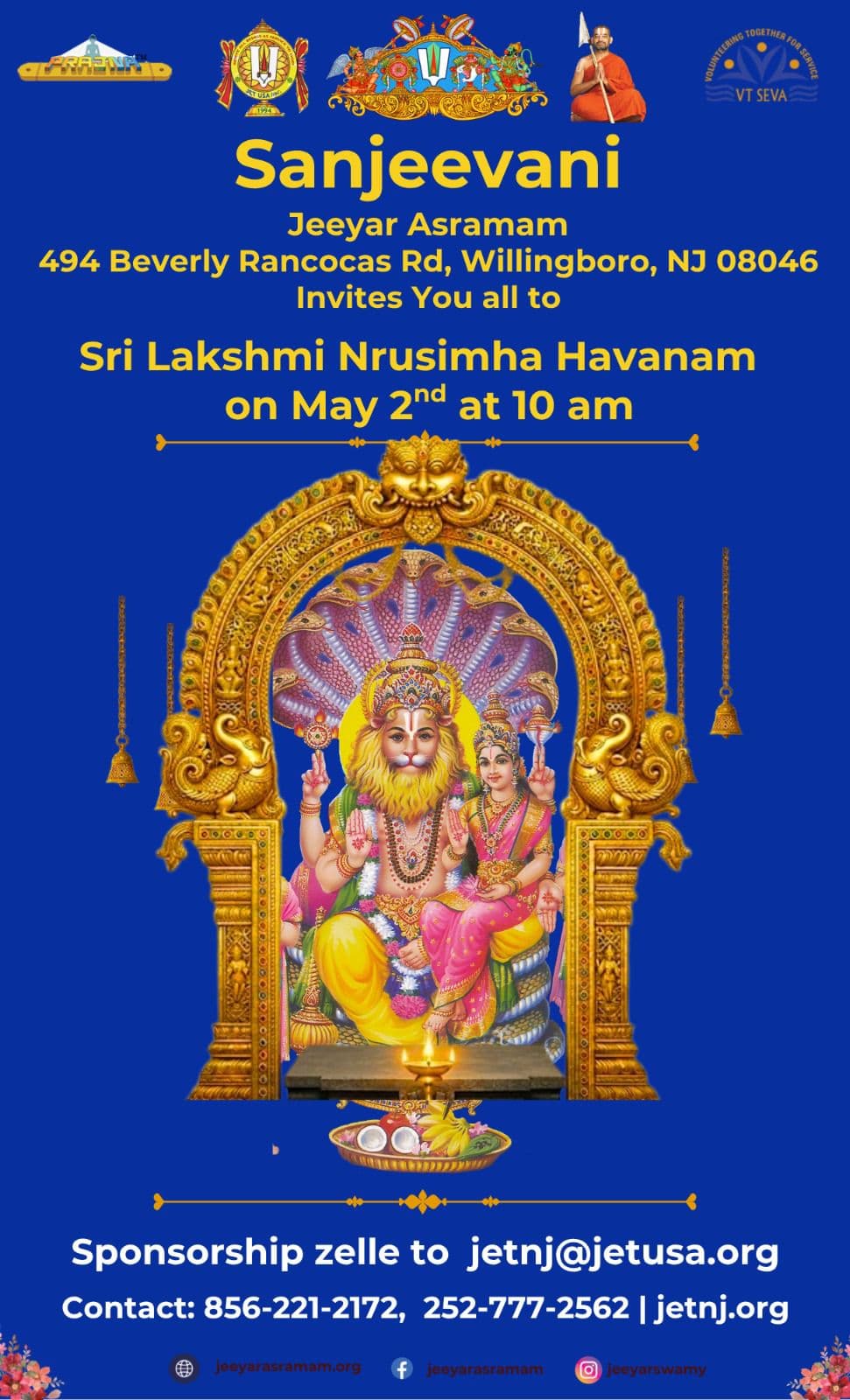
The peaceful, household-worshipped form. After the slaying of Hiranyakashipu, only Sri: Mahalakshmi could approach the wrathful Lord; she seats herself upon his left lap and his rage subsides into ananda. The form invoked in the Karavalamba Stotra.

Yo:ga Narasimha

योग-नृसिंह

Seated in padmasana with a yoga-patta binding the knees — the meditative aspect. Most strikingly enshrined at Sholingar (Tamil Nadu). This is the form to be invoked by sadhakas seeking concentration and victory over the inner enemies.

Ugra Narasimha

उग्र-नृसिंह

The fierce form — tongues outstretched, eyes blazing, claws drawn, the entrails of Hiranyakashipu garlanded across his chest. The Mantra Raja Pada Stotra opens by saluting this very ugra-svarupa.

Stambhodbhava Narasimha

स्तम्भोद्भव-नृसिंह

The 'Pillar-Born' — the iconic moment when the Lord splits open the stone column in Hiranyakashipu's audience hall, manifesting at neither dawn nor dusk, neither indoors nor outdoors, neither human nor beast.

Sri: Sudarshana Narasimha

सुदर्शन-नृसिंह

The dual-faced form invoked in Pancharatra: Sudarshana on one side, Narasimha on the reverse. Worshipped especially in Sri: Vaishnava temples (e.g. Tirupati) as the protective face of the Lord's resolve.

Sharabha (ecumenical reference)

शरभ

Shaiva traditions hold that Lord Shiva took the form of Sharabha to pacify Narasimha after the slaying. Sri: Vaishnava acharyas — including Vedanta Desika in his Sudarshana Ashtakam — gently set aside this account; we note it only as an ecumenical cross-reference.

Mantra · Japa

The Mantras of Narasimha

From the single seed-syllable to the king-mantra of the Pancharatra tradition. Each is given in Devanagari, IAST, Telugu, with its meaning and the manner of its recitation.

Beeja

Narasimha Beeja Mantra

Pancharatra Agama tradition

Devanagari

ॐ क्ष्रौं

IAST

om kshraum

Telugu

ఓం క్ష్రౌం

Meaning

The single seed-syllable that holds the entire vibration of the Man-Lion. Kshraum unites the energies of fire (ksha) and protection (raum).

How to use · Recited 108 times during morning sandhya, or as the opening invocation before any longer Narasimha stotra.

Ashtakshara

Narasimha Ashtakshara

Vaishnava sampradaya

Devanagari

ॐ नमो नारसिंहाय

IAST

om namo na:rasimha:ya

Telugu

ఓం నమో నారసింహాయ

Meaning

Eight-syllabled salutation: 'Om — salutations to Narasimha.' The mainstream japa-mantra, suitable for all aspirants without formal initiation.

How to use · 108 or 1008 repetitions daily; recommended at twilight (sandhya) for protection.

Mantra Raja

Mantra Raja Pada — opening verse

Sankarsana Samhita (Pancharatra) · Taittiriya Aranyaka 10.1.7 attestation

Devanagari

उग्रं वीरं महाविष्णुं ज्वलन्तं सर्वतोमुखम् । नृसिंहं भीषणं भद्रं मृत्युमृत्युं नमाम्यहम् ॥

IAST

ugram vi:ram maha:-vishnum jvalantham sarvato-mukham | nrisimham bhi:shanam bhadhram mrithyu-mrithyum nama:my aham ||

Telugu

ఉగ్రం వీరం మహావిష్ణుం జ్వలంతం సర్వతోముఖమ్ । నృసింహం భీషణం భద్రం మృత్యుమృత్యుం నమామ్యహమ్ ॥

Meaning

I bow to Narasimha — the fierce one, the hero, the great Vishnu, blazing on every side, terrifying yet auspicious, the very Death of death itself.

How to use · Considered the king of all Narasimha mantras (mantra-raja). Twelve compound names; one nyasa per name. Traditionally recited 32 times.

Lakshmi

Lakshmi Narasimha Maha: Mantra

Pancharatra Agama

Devanagari

ॐ ह्रीं क्ष्रौं श्रीं लक्ष्मी-नृसिंहाय नमः

IAST

om hri:m kshraum sri:m lakshmi:-nrisimha:ya namah

Telugu

ఓం హ్రీం క్ష్రౌం శ్రీం లక్ష్మీ-నృసింహాయ నమః

Meaning

Salutations to Lakshmi-Narasimha, invoked through the trinity of seed-syllables: hri:m (Maya), kshraum (Narasimha), sri:m (Lakshmi).

How to use · For domestic peace, removal of obstacles, and the fierce-yet-tender protection of the Mother and the Man-Lion together.

Pancharatra

Pancharatra Anushtup — Narasimha Gayatri

Mahanarayana Upanishad / Pancharatra adaptation

Devanagari

वज्रनखाय विद्महे तीक्ष्णदंष्ट्राय धीमहि । तन्नो नारसिंहः प्रचोदयात् ॥

IAST

vajra-nakha:ya vidmahe thi:kshna-damshtra:ya dhi:mahi | tan no na:rasimhah pracho:daya:th ||

Telugu

వజ్రనఖాయ విద్మహే తీక్ష్ణదంష్ట్రాయ ధీమహి । తన్నో నారసింహః ప్రచోదయాత్ ॥

Meaning

May we know him whose claws are like vajra; may we meditate upon him of the sharp fangs; may that Narasimha illumine our intellect.

How to use · Recited at sandhya, especially before the study of the Bhagavata Purana's Seventh Skandha.

Stotra · Praise

Sacred Hymns to Narasimha

Seven stotras — from Adi Shankaracharya's Karavalamba to the Pancharatra Mantra Raja, Prahlada's own praise, and the Sahasrana:ma. Each verse is given three-up: Devanagari, IAST, English.

Lakshmi Narasimha Karavalamba Stotra

Adi Shankaracharya

Stotra Ratnavali (Shankara corpus)

Seventeen verses, each ending with the refrain 'sri:-lakshmi:-nrisimha mama dehi kara:valambam' — 'O Lakshmi-Narasimha, give me the support of your hand.' One of the most-recited stotras in any Sri: Vaishnava household; invoked at moments of crisis.

Sanskrit

श्रीमत्पयोनिधिनिकेतन चक्रपाणे भोगीन्द्रभोगमणिराजितपुण्यमूर्ते । योगीश शाश्वत शरण्य भवाब्धिपोत लक्ष्मीनृसिंह मम देहि करावलम्बम् ॥

IAST

sri:math-payo-nidhi-niketana cakra-pa:ne: bhogi:ndra-bhoga-mani-ra:jitha-punya-mu:rthe: | yo:gi:sa sa:svatha saranya bhava:bdhi-pota lakshmi:-nrisimha mama dehi kara:valambam ||

Translation

O dweller in the milky ocean! O wielder of the discus! O sacred form gleaming with the jewels of Adisesha's hood! Lord of yogis, eternal refuge, ferry across the sea of samsa:ra — Lakshmi-Narasimha, give me the support of your hand.

Sanskrit

ब्रह्मेन्द्ररुद्रमरुदर्ककिरीटकोटि- सङ्घट्टिताङ्घ्रिकमलामलकान्तिकान्त । लक्ष्मीलसत्कुचसरोरुहराजहंस लक्ष्मीनृसिंह मम देहि करावलम्बम् ॥

IAST

brahmendra-rudra-marud-arka-kiri:ta-koti- sanghattitha:nghri-kamala:-mala-ka:nthi-ka:ntha | lakshmi:-lasat-kuca-saroruha-ra:ja-hamsa lakshmi:-nrisimha mama dehi kara:valambam ||

Translation

Whose lotus-feet are polished by the crowns of Brahma, Indra, Rudra, the Maruts, and the Sun; royal swan playing among the lotuses of Lakshmi's bosom — Lakshmi-Narasimha, give me the support of your hand.

Sanskrit

संसारघोरगहने चरतो मुरारे मारोग्रभीकरमृगप्रवरार्दितस्य । आर्तस्य मत्स्यपतिवाहन माश्रयार्थं लक्ष्मीनृसिंह मम देहि करावलम्बम् ॥

IAST

samsa:ra-ghora-gahane carato mura:re: ma:ro:gra-bhi:kara-mriga-pravara:rdhithasya | a:rthasya matsya-pati-va:hana ma:sraya:rtham lakshmi:-nrisimha mama dehi kara:valambam ||

Translation

As I wander through the terrible thicket of samsa:ra, slayer of Mura, harried by the fearsome beasts of desire and wrath — to one in distress, O rider of the king of fishes, for refuge — Lakshmi-Narasimha, give me the support of your hand.

Sanskrit

संसारकूपमतिघोरमगाधमूलं सम्प्राप्य दुःखशतसर्पसमाकुलस्य । दीनस्य देव कृपणापदमागतस्य लक्ष्मीनृसिंह मम देहि करावलम्बम् ॥

IAST

samsa:ra-ku:pam ati-ghoram aga:dha-mu:lam sampra:pya dhuhkha-satha-sarpa-sama:kulasya | di:nasya deva krupana:padam a:gathasya lakshmi:-nrisimha mama dehi kara:valambam ||

Translation

Fallen into the bottomless, terrible well of samsa:ra, beset by a hundred serpents of sorrow — wretched, Lord, brought to a piteous pass — Lakshmi-Narasimha, give me the support of your hand.

Sanskrit

संसारसागरविशालकरालकाल- नक्रग्रहग्रसननिग्रहविग्रहस्य । व्यग्रस्य रागनिचयोर्मिनिपीडितस्य लक्ष्मीनृसिंह मम देहि करावलम्बम् ॥

IAST

samsa:ra-sa:gara-visa:la-kara:la-ka:la- nakra-graha-grasana-nigraha-vigrahasya | vyagrasya ra:ga-nicayormi-nipi:dithasya lakshmi:-nrisimha mama dehi kara:valambam ||

Translation

In the vast and terrible ocean of samsa:ra, gripped by the crocodile of time, body seized and held — distracted, crushed by the surging waves of attachment — Lakshmi-Narasimha, give me the support of your hand.

Sanskrit

संसारवृक्षमघबीजमनन्तकर्म- शाखाशतं करणपत्रमनङ्गपुष्पम् । आरुह्य दुःखफलितं चकितं दयालो लक्ष्मीनृसिंह मम देहि करावलम्बम् ॥

IAST

samsa:ra-vriksham agha-bi:jam ananta-karma- sa:kha:-satham karana-patram ananga-pushpam | a:ruhya dhuhkha-phalitham cakitham daya:lo: lakshmi:-nrisimha mama dehi kara:valambam ||

Translation

Climbed upon the tree of samsa:ra — its seed is sin, its hundred branches are endless karma, its leaves are the senses, its flower is desire — and trembling at the bitter fruit it bears, O compassionate one — Lakshmi-Narasimha, give me the support of your hand.

Sanskrit

संसारसर्पघनवक्त्रभयोग्रतीव्र- दंष्ट्राकरालविषदग्धविनष्टमूर्तेः । नागारिवाहन सुधाब्धिनिवास शौरे लक्ष्मीनृसिंह मम देहि करावलम्बम् ॥

IAST

samsa:ra-sarpa-ghana-vaktra-bhayogra-thi:vra- dhamshtra:-kara:la-visha-dagdha-vinashta-mu:rtheh | na:ga:ri-va:hana sudha:bdhi-niva:sa saure lakshmi:-nrisimha mama dehi kara:valambam ||

Translation

Of one whose body is destroyed and burned by the cruel poison of the sharp fangs in the dense, fearsome jaws of the samsa:ra-serpent — O rider of the serpent's enemy (Garuda), dweller in the ocean of nectar, hero — Lakshmi-Narasimha, give me the support of your hand.

Sanskrit

संसारदावदहनातुरभीकरोरु- ज्वालावलीभिरतिदग्धतनूरुहस्य । त्वत्पादपद्मसरसीशरणागतस्य लक्ष्मीनृसिंह मम देहि करावलम्बम् ॥

IAST

samsa:ra-dha:va-dahana:thura-bhi:karo:ru- jva:la:vali:bhir ati-dagdha-thanu:ruhasya | tvat-pa:da-padma-sarasi:-sarana:gathasya lakshmi:-nrisimha mama dehi kara:valambam ||

Translation

Of one whose body-hairs are scorched by the lines of terrible flame in the forest-fire of samsa:ra, who has come for refuge to the lotus-pool of your feet — Lakshmi-Narasimha, give me the support of your hand.

Sanskrit

संसारजालपतितस्य जगन्निवास सर्वेन्द्रियार्थबडिशार्थझषोपमस्य । प्रोत्खण्डितप्रचुरतालुकमस्तकस्य लक्ष्मीनृसिंह मम देहि करावलम्बम् ॥

IAST

samsa:ra-ja:la-patitasya jagan-niva:sa sarve:ndriya:rtha-badisa:rtha-jhashopamasya | prothkhanditha-pracura-tha:luka-mastakasya lakshmi:-nrisimha mama dehi kara:valambam ||

Translation

Of one fallen into the net of samsa:ra, O dweller in the worlds — like a fish hooked by the bait of all the sense-objects, palate and head torn through — Lakshmi-Narasimha, give me the support of your hand.

Sanskrit

संसारभीकरकरीन्द्रकराभिघात- निष्पीड्यमानवपुषः सकलार्तिनाश । प्राणप्रयाणभवभीतिसमाकुलस्य लक्ष्मीनृसिंह मम देहि करावलम्बम् ॥

IAST

samsa:ra-bhi:kara-kari:ndra-kara:bhigha:tha- nishpi:dyama:na-vapushah sakala:rthi-na:sa | pra:na-praya:na-bhava-bhi:thi-sama:kulasya lakshmi:-nrisimha mama dehi kara:valambam ||

Translation

Of one whose body is being crushed by the trunk-blow of the terrible elephant-king of samsa:ra, O destroyer of every distress — overwhelmed by the dread of the going-forth of the breath and of rebirth — Lakshmi-Narasimha, give me the support of your hand.

Sanskrit

अन्धस्य मे हृतविवेकमहाधनस्य चोरैः प्रभो बलिभिरिन्द्रियनामधेयैः । मोहान्धकूपकुहरे विनिपातितस्य लक्ष्मीनृसिंह मम देहि करावलम्बम् ॥

IAST

andhasya me hritha-viveka-maha:-dhanasya coraih prabho balibhir indriya-na:madhe:yaih | mo:ha:ndha-ku:pa-kuhare vinipa:thithasya lakshmi:-nrisimha mama dehi kara:valambam ||

Translation

Blind, my great wealth of discrimination stolen, O Lord, by the powerful thieves whose names are 'the senses' — flung down into the dark hollow of the well of delusion — Lakshmi-Narasimha, give me the support of your hand.

Sanskrit

लक्ष्मीपते कमलनाभ सुरेश विष्णो वैकुण्ठ कृष्ण मधुसूदन पुष्कराक्ष । ब्रह्मण्य केशव जनार्दन चक्रपाणे लक्ष्मीनृसिंह मम देहि करावलम्बम् ॥

IAST

lakshmi:-pate kamala-na:bha suresa vishno vaikuntha krishna madhusu:dana pushkara:ksha | brahmanya kesava jana:rdana cakra-pa:ne: lakshmi:-nrisimha mama dehi kara:valambam ||

Translation

Lord of Lakshmi, lotus-naveled, lord of the gods, Vishnu! Vaikuntha, Krishna, slayer of Madhu, lotus-eyed! Lover of brahmanas, Keshava, Janardana, wielder of the discus — Lakshmi-Narasimha, give me the support of your hand.

Sanskrit

एकेन चक्रमपरेण करेण शङ्ख- मन्येन सिन्धुतनयामवलम्ब्य तिष्ठन् । वामेतरेण वरदाभयपद्मचिह्नं लक्ष्मीनृसिंह मम देहि करावलम्बम् ॥

IAST

ekena cakram aparena karena sankham anyena sindhu-thanaya:m avalambya thishthan | va:me:thare:na vara-dha:bhaya-padma-cihnam lakshmi:-nrisimha mama dehi kara:valambam ||

Translation

Standing — with one hand the discus, with another the conch, with another supporting the daughter of the ocean (Lakshmi); with the right hand the marks of boon-giving, fearlessness, and the lotus — Lakshmi-Narasimha, give me the support of your hand.

Sanskrit

यन्माययोर्जितवपुःप्रचुरप्रवाह- मग्नार्थमत्र निवहोरुकरावलम्बम् । लक्ष्मीनृसिंहचरणाब्जमधुव्रतेन स्तोत्रं कृतं सुखकरं भुवि शङ्करेण ॥

IAST

yan-ma:yayo:rjitha-vapuh-pracura-prava:ha- magna:rtham atra nivahoru-kara:valambam | lakshmi:-nrisimha-chara:na:bja-madhu-vratena sthothram kritham sukha-karam bhuvi sankarena ||

Translation

For one drowned by the great current of bodily existence raised up by his ma:ya:, this support of the upraised arm is given. The honey-bee at the lotus-feet of Lakshmi-Narasimha — Shankara — has made this stotra in the world for its joy.

How to chant · Best recited daily after the morning sandhya, ideally before a Lakshmi-Narasimha vigraha or salagrama. The refrain alone may be repeated when time is short.

Sri: Narasimha Kavacha

Spoken by Prahlada Maharaja

Brahmanda Purana — Trailokya-vijaya Khanda

A protective armor (kavacha). Prahlada, having received the eight-limbed yoga from Yogananda Narasimha, composes this dhyana to be worn as armor by every devotee. Explicit nyasa: each name guards a specific limb of the body.

Sanskrit

नृसिंहो मे शिरः पातु लोकरक्षार्थसम्भवः । सर्वगोऽपि स्तम्भवासः फलश्रीहरिरीश्वरः ॥

IAST

nrisimho me sirah pa:thu loka-raksha:rtha-sambhavah | sarvago'pi stambha-va:sah phala-sri:-harir i:svarah ||

Translation

May Narasimha — who took form to protect the worlds, who is everywhere yet dwelt within the column — guard my head. He is Hari, the Lord, the giver of the fruit (Lakshmi).

Sanskrit

मायानृसिंहो मे पादौ हस्तौ वज्रनखस्तथा । जिह्वां पातु महाजिह्वो दन्तान् मे दन्तकोटिभृत् ॥

IAST

ma:ya:-nrisimho me pa:dau hastau vajra-nakhas thatha: | jihva:m pa:thu maha:-jihvo dantha:n me danta-koti-bhrith ||

Translation

May Maya:-Narasimha guard my feet; the Vajra-clawed one, my hands; the Great-Tongued, my tongue; he who bears tens of millions of fangs, my teeth.

Sanskrit

नासिकां पातु तीक्ष्णाङ्ग कर्णौ मे शङ्खकर्णकः । नेत्रे ज्वालास्यनयनो ललाटं फालचन्द्रवत् ॥

IAST

na:sika:m pa:thu thi:kshna:nga karnau me sankha-karnakah | netre jva:la:sya-nayano lala:tam pha:la-candravat ||

Translation

May Thi:kshna:nga guard my nose; he of the conch-like ears, my ears; the flame-mouthed, flame-eyed one, my eyes; and like the moon-on-brow, my forehead.

How to chant · Read once at dawn before leaving the home; whisper the relevant pada when entering uncertain places. Recited 32 or 108 times during personal calamity.

Mantra Raja Pada Stotra

Sankarsana (Pancharatra revelation)

Sankarsana Samhita · also at Taittiriya Aranyaka 10.1.7

The most-revered Pancharatra stotra to Narasimha. Eight padas — Ugra, Vira, Mahavishnu, Jvalanta, Sarvatomukha, Nrisimha, Bhishana, Bhadra — each treated as a single pada of nya:sa upon a limb of the body. Sri: Vaishnava acharyas treat it as the very seal of the Narasimha sampradaya.

Sanskrit

उग्रं वीरं महाविष्णुं ज्वलन्तं सर्वतोमुखम् । नृसिंहं भीषणं भद्रं मृत्युमृत्युं नमाम्यहम् ॥

IAST

ugram vi:ram maha:-vishnum jvalantham sarvato-mukham | nrisimham bhi:shanam bhadhram mrithyu-mrithyum nama:my aham ||

Translation

I bow to him — the fierce, the heroic, the Great Vishnu, blazing on every side, the Man-Lion, terrifying yet utterly auspicious, the Death of death.

Sanskrit

उग्रवीराय महावीर्याय नमामि भीषणाय च । हिरण्यकशिपोर्वक्षःकोशं विदारयन्नहम् ॥

IAST

ugra-vi:ra:ya maha:-vi:rya:ya nama:mi bhi:shana:ya ca | hiranyakasipor vakshah-kosam vidha:rayann aham ||

Translation

I bow to the fierce hero, of immense valour, the terrifying one — who tore open the casket of Hiranyakasipu's chest.

How to chant · Twelve recitations in a single sitting (one per pada), preferably at the junctions of day and night — sandhi-velas — when the original avatara manifested.

Prahlada Stuti

Spoken by Prahlada Maharaja

Bhagavata Purana, Skandha 7, Chapter 9

The boy-saint, after every other deva had fled the Lord's wrath, walks alone to within a hand's breadth of the blood-soaked claws and praises him. The Lord, melted by this stuti, gathers Prahlada into his lap and licks his head — the moment of grace.

Sanskrit

ब्रह्मादयः सुरगणा मुनयोऽथ सिद्धाः सत्त्वैकतानगतयो वचसां प्रवाहैः । नाराधितुं पुरुगुणैरधुनापि पिप्रुः किं तोष्टुमर्हति स मे हरिरुग्रजातेः ॥

IAST

brahma:dayah sura-gana: munayo'tha siddha:h sattvaika-tha:na-gatayo vachasa:m prava:haih | na:ra:dhithum puru-gunair adhuna:pi piprrih kim thoshtum arhati sa me harir ugra-ja:theh ||

Translation

Even Brahma and the host of devas, the silent munis and the perfected siddhas — masters of pure-sattva speech — could not, even now, fully please him with their many virtues. Then how shall I, born of a fierce demon-lineage, hope to satisfy that Hari?

Sanskrit

मन्ये धनाभिजनरूपतपःश्रुतौजस्- तेजःप्रभाव-बल-पौरुष-बुद्धि-योगाः । नाराधनाय हि भवन्ति परस्य पुंसो भक्त्या तुतोष भगवान् गजयूथपाय ॥

IAST

manye dhana:bhijana-ru:pa-thapah-sruthaujas- thejah-prabha:va-bala-paurusha-buddhi-yo:ga:h | na:ra:dhana:ya hi bhavanti parasya pumso bhakthya: thuthosha bhagava:n gaja-yu:thapa:ya ||

Translation

Wealth, lineage, beauty, austerity, scholarship, vital strength, splendor, influence, prowess, valor, intellect, even yoga — none of these by themselves can please the Supreme Person. By bhakti alone the Lord was satisfied — for the king of elephants (Gajendra).

Sanskrit

विप्राद्द्विषड्गुणयुतादरविन्दनाभ- पादारविन्दविमुखात्श्वपचं वरिष्ठम् । मन्ये तदर्पितमनोवचनेहितार्थ- प्राणं पुनाति स कुलं न तु भूरिमानः ॥

IAST

vipra:d dvi-shad-guna-yutha:d aravinda-na:bha- pa:da:ravinda-vimukha:th svapacam varishtham | manye tad-arpita-mano-vachane:hitha:rtha- pra:nam puna:thi sa kulam na tu bhu:ri-ma:nah ||

Translation

More worthy than a bra:hmana endowed with the twelve virtues but turned away from the lotus-feet of him whose navel bears the lotus, I consider the cha:nda:la who has surrendered to him his mind, speech, deeds, wealth, and very life — he sanctifies his entire lineage; not so the proud one of high birth.

Sanskrit

नैवात्मनः प्रभुरयं निजलाभपूर्णो मानं जनादविदुषः करुणो वृणीते । यद्यज्जनो भगवते विदधीत मानं तच्चात्मने प्रतिमुखस्य यथा मुखश्रीः ॥

IAST

naiva:thmanah prabhur ayam nija-la:bha-pu:rno: ma:nam jana:d avidhushah karuno vruni:the | yad yaj jano bhagavate vidadhi:tha ma:nam tac cha:thmane pratimukhasya yatha: mukha-sri:h ||

Translation

This Lord, complete in his own being, has no need of honour from the unenlightened; out of compassion he accepts it. Whatever honour a devotee offers to the Bhagava:n, that returns to himself — as the beauty of one's own face shines back from a mirror.

Sanskrit

तस्मादहं विगतविक्लव ईश्वरस्य सर्वात्मना महि गृणामि यथा मनीषम् । नीचोऽजया गुणविसर्गमनुप्रविष्टः पूयेत येन हि पुमाननुवर्णितेन ॥

IAST

thasma:d aham vigata-viklava i:svarasya sarva:thmana: mahi grina:mi yatha: mani:sham | ni:co'jaya: guna-visargam anupravishtah pu:ye:tha yena hi puma:n anuvarnithena ||

Translation

Therefore, free of trembling, with all my being I sing — as my understanding allows — the greatness of the Lord. By that very singing, even one fallen low and entered into the play of the gunas through ma:ya: becomes purified.

Sanskrit

त्रस्ता वयं त्वदुरुगायविषादिग्धमुखाद् भीताः पलायनपरा नवथुर्न लोकाः । यस्मात्ते स्थाणुरचलोऽतिनिगूढधारः त्वत्पादपद्मयुगलं शरणं प्रपन्नाः ॥

IAST

thrastha: vayam tvad-uru-ga:ya-visha-digdha-mukha:d bhi:tha:h pala:yana-para: navathur na lo:ka:h | yasma:th te stha:nur acalo'ti-nigu:dha-dha:rah tvat-pa:da-padma-yugalam saranam prapanna:h ||

Translation

We are afraid, fled in terror, of your face that drips with the venom-tipped fangs of your great roar — yet the worlds do not perish, for your two lotus-feet, immovable as a pillar, hold us. To them we have come for refuge.

Sanskrit

नैवोद्विजे पर दुरत्ययवैतरण्यास् त्वद्वीर्यगायनमहामृतमग्नचित्तः । शोचे ततो विमुखचेतस इन्द्रियार्थ- मायासुखाय भरमुद्वहतो विमूढान् ॥

IAST

naivodvije para duratyaya-vaitharanya:s tvad-vi:rya-ga:yana-maha:mritha-magna-ciththah | soce tato vimukha-cetasa indriya:rtha- ma:ya:-sukha:ya bharam udvahato vimu:dha:n ||

Translation

I do not fear, O Supreme, even the impassable Vaitharani: — my mind is drowned in the vast nectar of singing your prowess. I grieve only for the deluded, whose minds are turned away from you, who carry the heavy burden for the sake of the illusory pleasures of the senses.

Sanskrit

प्रायेण देव मुनयः स्वविमुक्तिकामा मौनं चरन्ति विजने न परार्थनिष्ठाः । नैतान् विहाय कृपणान् विमुमुक्ष एको नान्यं त्वदस्य शरणं भ्रमतोऽनुपश्ये ॥

IAST

pra:ye:na deva munayah sva-vimukti-ka:ma: maunam caranti vijane na para:rtha-nishtha:h | naitha:n viha:ya kripana:n vimumuksha eko na:nyam tvad asya saranam bhramato'nupasye ||

Translation

Most sages, O Lord, desiring their own liberation, walk in silence in solitude, not committed to others' welfare. I cannot abandon these wretched ones and seek liberation alone — and for the world that wanders, I see no refuge other than you.

How to chant · Recited as a parayanam during Narasimha Jayanti and on the pradosha of Vaishakha shukla chaturdashi. The full chapter (Bhagavata 7.9) is read aloud in the temple sannidhi.

Brahma's Stuti to Narasimha

Spoken by Brahma

Bhagavata Purana, Skandha 7, Chapter 8 (verses 41–50)

After the slaying, the Lord's wrath does not subside. Brahma sends Prahlada forward, then himself praises the Lord — invoking him as the very source of dharma, the sustainer of the moving and unmoving worlds.

Sanskrit

नतोऽस्म्यनन्ताय दुरन्तशक्तये विचित्रवीर्याय पवित्रकर्मणे । विश्वस्य सर्गस्थितिसंयमान् गुणैः स्वलीलया सन्दधते अव्ययात्मने ॥

IAST

nato'smy anantha:ya duranta-sakthaye vicitra-vi:rya:ya pavitra-karmane | visvasya sarga-sthiti-samyama:n gunaih sva-li:laya: sandadhate avyaya:thmane ||

Translation

I bow to the Infinite One — of measureless power, marvelous prowess, sanctifying deeds — who through the gunas effortlessly sustains the creation, preservation, and dissolution of the universe by his own play; to the Imperishable Self.

Sanskrit

त्वं नो दूर इति प्रोक्तस्त्वमेवासि सदाश्रयः । यन्न पश्यन्ति निकटे लोकाः क्रोधादिमोहिताः ॥

IAST

thvam no dhu:ra iti prokta tvam e:va:si sada:srayah | yan na pasyanthi nikate lo:ka:h krodha:di-mo:hitha:h ||

Translation

Though it is said 'thou art far from us,' thou art the ever-present refuge — whom the worlds, deluded by anger and the rest, fail to see though he stands close.

How to chant · Read at the close of the Narasimha Jayanti puja, before arghya is offered to the Lord.

Achyutashtakam

Adi Shankaracharya

Stotra Ratnavali (Shankara corpus)

Eight verses to Achyuta — 'the One who never falls.' Though addressed to all of Vishnu, several of the verses invoke Narasimha by name. Often appended to Narasimha parayanam.

Sanskrit

अच्युतं केशवं रामनारायणं कृष्णदामोदरं वासुदेवं हरिम् । श्रीधरं माधवं गोपिकावल्लभं जानकीनायकं रामचन्द्रं भजे ॥

IAST

acyutham kesavam ra:ma-na:ra:yanam krishna-da:mo:daram va:sude:vam harim | sri:dharam ma:dhavam gopika:-vallabham ja:naki:-na:yakam ra:machandram bhaje ||

Translation

I worship Achyuta, Keshava, Rama-Na:ra:yana, Krishna-Damodara, Vasudeva, Hari, Sridhara, Madhava, Beloved of the Gopikas, Lord of Janaki — Ramachandra.

Sanskrit

अच्युतं केशवं सत्यभामाधवं माधवं श्रीधरं राधिकाराधितम् । इन्दिरामन्दिरं चेतसा सुन्दरं देवकीनन्दनं नन्दजं सन्दधे ॥

IAST

acyutham kesavam satya-bha:ma:-dhavam ma:dhavam sri:-dharam ra:dhika:ra:dhitham | indhira:-mandhiram cethasa: sundharam dhevaki:-nandhanam nanda-jam sandadhe ||

Translation

I hold in mind Achyuta, Keshava, Lord of Satyabhama, Madhava, bearer of Sri:, worshipped by Radhika; the temple of Indira (Lakshmi); beautiful in heart; son of Devaki, born in Nanda's home.

Sanskrit

विष्णवे जिष्णवे शङ्खिने चक्रिणे रुक्मिणीरागिणे जानकीजानये । वल्लवीवल्लभायाऽर्चितायाऽऽत्मने कंसविध्वंसिने वंशिने ते नमः ॥

IAST

vishnave jishnave sankhine cakrine rukmini:-ra:gine: ja:naki:-ja:naye: | vallavi:-vallabha:ya:rchitha:ya:thmane kamsa-vidhvamsine vamsine te namah ||

Translation

Salutations to Vishnu, the victorious, holder of the conch and discus, lover of Rukmini, husband of Janaki, beloved of the gopis, worshipped by all, the Self, destroyer of Kamsa, holder of the flute — to thee.

Sanskrit

कृष्ण गोविन्द हे राम नारायण श्रीपते वासुदेवाजित श्रीनिधे । अच्युतानन्त हे माधवाधोक्षज द्वारकानायक द्रौपदीरक्षक ॥

IAST

krishna govinda he ra:ma na:ra:yana sri:-pate va:sude:va:jitha sri:-nidhe | achyutha:nantha he ma:dhava:dho:kshaja dva:raka:-na:yaka dhraupadhi:-rakshaka ||

Translation

Krishna! Govinda! Rama! Na:ra:yana! Lord of Sri:, Vasudeva the unconquered, treasure of Sri:! Achyuta, Ananta, Madhava, the unfallen — Lord of Dvaraka, protector of Draupadi!

Sanskrit

राक्षसक्षोभितः सीतया शोभितो दण्डकारण्यभूपुण्यताकारणः । लक्ष्मणेनान्वितो वानरैः सेवितो 'गस्त्यसम्पूजितो राघवः पातु माम् ॥

IAST

ra:kshasa-kshobhithah si:thaya: sobhitho dandaka:ranya-bhu:-punyatha:-ka:ranah | lakshmane:na:nvitho va:naraih sevito 'gastya-sampu:jitho ra:ghavah pa:thu ma:m ||

Translation

Tormented by the rakshasas, made resplendent by Sita, the cause of the holiness of the Dhandaka forest's earth, attended by Lakshmana, served by the monkeys, worshipped by Agastya — may Raghava protect me.

Sanskrit

धेनुकारिष्टकोऽनिष्टकृद्द्वेषिणां केशिहा कंसहृद्वंशिकावादकः । पूतनाकोपकः सूरजाखेलनो बालगोपालकः पातु मां सर्वदा ॥

IAST

dhe:nuka:rishtako'nishta-kridh dve:shina:m kesi-ha: kamsa-hridh vamsika:-va:dhakah | pu:thana:-kopakah su:raja:-khelano ba:la-go:pa:lakah pa:thu ma:m sarvadha: ||

Translation

Slayer of Dhenuka and Arishta, bringer of ill to those who hate, killer of Keshi, taker of Kamsa's heart, player of the flute, vexer of Pu:thana:, sporter on the Yamuna: — may the boy-cowherd ever protect me.

Sanskrit

विद्युदुद्द्योतवत्प्रस्फुरद्वाससं प्रावृडम्भोदवत्प्रोल्लसद्विग्रहम् । वन्यया मालया शोभितोरःस्थलं लोहिताङ्घ्रिद्वयं वारिजाक्षं भजे ॥

IAST

vidyud-uddyota-vat prasphurad-va:sasam pra:vrid-ambhoda-vat prollasad-vigraham | vanyaya: ma:laya: sobhithorah-sthalam lo:hitha:nghri-dhvayam va:ri-ja:ksham bhaje ||

Translation

I worship him whose garment flashes like lightning, whose body shines like the rain-cloud of the monsoon, whose breast is radiant with a forest-garland, whose two feet are reddish, whose eyes are like the lotus.

Sanskrit

कुञ्चितैः कुन्तलैर्भ्राजमानाननं रत्नमौलिं लसत्कुण्डलं गण्डयोः । हारकेयूरकं कङ्कणप्रोज्ज्वलं किङ्किणीमञ्जुलं श्यामलं तं भजे ॥

IAST

kuncithaih kuntalair bhra:jama:na:nanam ratna-maulim lasat-kundalam gandayoh | ha:ra-ke:yu:rakam kankana-projjvalam kinkini:-manjulam sya:malam tham bhaje ||

Translation

I worship him — the dark one — whose face shines with curling locks, whose crown is jewelled, whose ear-ornaments dance upon his cheeks, who is bright with garland and armlets and bracelets, whose ankle-bells are sweet.

How to chant · Recited daily as part of the dvadasha-stotra cycle.

Sri: Lakshmi Narasimha Sahasrana:ma

Brahmanda Purana — Uttara Khanda

Brahmanda Purana — Uttara Khanda

One thousand names of the Man-Lion, organized into shatas (centuries) of compounded names. Recited during the Narasimha Jayanti utsava and during personal sankalpa-archana. JETNJ offers archana on the devotee's name and nakshatra at the asramam.

Sanskrit

उग्रं वीरं महाविष्णुं ज्वलन्तं सर्वतोमुखम् । नृसिंहं भीषणं भद्रं मृत्युमृत्युं नमाम्यहम् ॥

IAST

ugram vi:ram maha:-vishnum jvalantham sarvato-mukham | nrisimham bhi:shanam bhadhram mrithyu-mrithyum nama:my aham ||

Translation

I bow to Narasimha — the fierce, the heroic, the Great Vishnu, blazing on every side, the man-lion, terrifying yet auspicious, the Death of death.

Sanskrit

ॐ नृसिंहो महासिंहो दिव्यसिंहो महाबलः । उग्रसिंहो महादेवः स्तम्भजश्च महेश्वरः ॥

IAST

om nrisimho maha:-simho divya-simho maha:-balah | ugra-simho maha:-dhevah stambha-jas ca mahesvarah ||

Translation

Om — Nrisimha, the great lion, the divine lion, of immense strength; the fierce lion, the great deva, the column-born, the supreme lord. (Names 1–8 of the Sahasrana:ma.)

Sanskrit

अभीष्टदः फलदः सर्वज्ञः पुरुषोत्तमः । भक्तानां वत्सलः शान्तः शरणागतवत्सलः ॥

IAST

abhi:shtadah phaladhah sarvajnah purushoththamah | bhaktha:na:m vathsalah sa:nthah sarana:gatha-vathsalah ||

Translation

Granter of desires, giver of fruits, all-knowing, the Supreme Person, tender to his devotees, peaceful, tender to those who have surrendered.

Sanskrit

य इदं पठते स्तोत्रं नृसिंहस्य महात्मनः । सर्वान्कामानवाप्नोति विष्णुलोकं स गच्छति ॥

IAST

ya idham pathathe sthothram nrisimhasya maha:thmanah | sarva:n ka:ma:n ava:pno:thi vishnu-lokam sa gacchati ||

Translation

Whoever reads this stotra of the great-souled Narasimha attains all his desires and goes to the world of Vishnu.

How to chant · Full parayanam during Narasimha Jayanti and Swati nakshatra. JETNJ accepts archana sponsorship on your name and nakshatra at the asramam ($36).

Kshetra · Sacred Geography

Where the Lord Resides

Six principal kshetras of Narasimha across the Indian peninsula — from the cliff-shrines of Ahobilam to the river-confluence at Antarvedi.

Ahobilam

Allagadda mandal, Nandyal district

Andhra Pradesh

Presiding Form

Nava Narasimha (nine shrines)

The foundational kshetra. Tradition holds this is the very forest where the Lord emerged from the column and slew Hiranyakashipu. Seat of the Ahobila Mutt, the principal Sri: Vaishnava monastic lineage of the Narasimha tradition. Lower Ahobilam (Diguva) and Upper Ahobilam (Eguva) together house all nine shrines across rugged hills.

Simhachalam

Visakhapatnam

Andhra Pradesh

Presiding Form

Sri: Varaha-Lakshmi-Narasimha

Unique combined avatara — Varaha and Narasimha as one murti. The deity is covered year-round in sandalwood paste; only on Akshaya Tritiya (Chandanotsavam) is the true form revealed for twelve hours. One of the 108 Divya Desams not formally listed but venerated by Sri: Vaishnavas.

Yadagiri / Yadadri

Bhuvanagiri district

Telangana

Presiding Form

Five self-manifest forms (Pancha Narasimha)

Sage Yadarishi performed penance here and was granted darshan of five forms — Jwala, Yogananda, Gandabherunda, Ugra, and Lakshmi Narasimha — naturally manifest in the rock. Recently re-consecrated as a major pilgrimage seat for Telangana.

Mangalagiri

Guntur district

Andhra Pradesh

Presiding Form

Panakala Lakshmi Narasimha

The Lord here accepts only panakam — jaggery-water — as his offering. The pujari pours panakam into the deity's mouth; half is consumed (the sound of swallowing is audible) and half returned as prasada. Among the eight Mahakshetras of the Vaishnava tradition.

Sholingar / Sholinghur

Ranipet district

Tamil Nadu

Presiding Form

Sri: Yo:ga Narasimha

Atop a 1,305-step hill, the Lord is enshrined in the meditative Yo:ga-asana. Doddacharya, an acharya in the Ramanuja parampara, is said to have driven away an evil spirit possessing the Vijayanagara princess by reciting the Mantra Raja Pada Stotra here. A shrine to Anjaneya stands on a sister hill.

Antarvedi

East Godavari district

Andhra Pradesh

Presiding Form

Sri: Lakshmi Narasimha

Sacred Sapta-Sagara confluence — the place where the Vasishtha Godavari empties into the Bay of Bengal. The annual Kalyanotsavam draws lakhs of devotees. Tradition recalls that Narasimha resided here after receiving Lakshmi's pacification.

Vaishakha Shukla Chaturdashi

Sri: Narasimha Jayanti

The day of the avatara — observed on the fourteenth lunar day of the bright half of the month of Vaishakha, at the precise junction of dusk (sandhya-vela) when the Lord emerged from the column.

Thithi

वैशाख शुक्ल चतुर्दशी

vaisa:kha sukla cathurdhasi: · sandhya-vela

01

Upava:sa (Fasting)

A complete fast from sunrise of Chaturdashi until the sandhya of Chaturdashi-evening — when the avatara is believed to have manifest. Light prasad-bhoga is taken only after Narasimha-darshan.

02

Abhishe:kam

Ritual bathing of the Lord with milk, curd, honey, ghee, jaggery-water (panakam), and sandalwood paste — followed by floral archana with the 108 names.

03

Bhagavata Pa:ra:yanam

The full Seventh Skandha (chapters 1–10) of the Bhagavata Purana is read aloud in the temple. The slaying-narrative (chapter 8) and Prahlada's stuti (chapter 9) are read at sandhya.

04

Mantra Raja Pada Stotra

Recited 12 times in the prescribed nyasa — once for each pada — at the precise junction of dusk, in honor of the threshold-hour at which the Lord first emerged.

05

Panakam Naivedya

Sweet jaggery-water with cardamom and pepper, offered to cool the Lord's wrath — the same prasada that defines the daily seva at Mangalagiri. Distributed freely to devotees.

Join our community